FAQs
Q: how much free time will there be?
A: we are by nature not “tour people”--- we like our independence and free time to explore on our own. we have built the schedule as much free time as we can: each day at least a few hours---if not the whole day!---of complete down time. of course, we can suggest a whole range of activities for each town, but you can decide whether or not to take 12 baths or go for a hike or take an optional cultural class like soba noodle making or taiko drumming. some folks opt to sleep in and miss breakfast, skip the hike and take a nap, while others join on every activity we can come up with! we like to stress that this is NOT a fully guided tour: according to condé nast traveler the correct term is an “escorted” tour. we escort you in your adventure and leave it up to you to fill your day as you please. in each small village we will give you a map we’ve made of our favorite baths, lunch spots, etc.... to help you navigate.
Q: do i need a special visa or immunizations for japan?
A: all you need is a valid passport, no visa is required for travel to japan. please be sure yours is current and ready to go (and we will double-check this when you turn in a copy of your passport with your application). no immunizations or special precautions are needed for travel to japan. in fact, upon landing you can even drink the water from any tap. a good site to visit is the japan national tourist organization web site for all the details about traveling to japan you could ever imagine: www.jnto.org
Q: what kind of accommodations? futons or beds?
A: in the cities we will be staying in modern, western-style hotels, with beds instead of futons. once we reach the countryside, we will be staying in small, traditional japanese ryokans. often owned by one family for many generations, it is quite like staying in someone’s home. in these ryokan/inns you will mostly sleep on futons on tatami mats, which some in our groups past have said are much more comfortable than a western bed. we can sometimes request a western-style bed for you, but cannot guarantee they will have one to offer (and there may be a charge for them bringing in beds for you if they have them). being able to get up and off the floor is a requirement when traveling to japan: not only will you most often sleep on the floor, but we do also sometimes dine while seated on the floor as well.
Q: is there a non-smoking room option?
A: japan is still a country of smokers. it is very hard to even find restaurants with non-smoking sections, and when they do, it is usually separated by nothing at all (one table smoking, the next “non-smoking”). we have chosen the restaurants that we have included in the tour because we love the food, and by reserving a section for a group we can guarantee that at least our space is as non-smoking as possible if not completely non-smoking. as far as the inns we will be staying at, we have requested non-smoking, and they expect us to be a bit picky about this. they generally air out the futons after each guest, but there may be times when we will have to switch rooms because of this. thankfully trains and transport are all non-smoking places now in japan. if you are a heavy smoker, we request that you do not join our tour as we attract mostly health-conscious folks who have in the past been physically challenged by the rare smoker who traveled with us. i personally am allergic to smoke, so having someone reeking of smoke get on our bus or train car can really cause me and others to suffer.
Q: do you have a single supplement? what if i’m traveling alone?
A: while we used to match roommates (with much success over 15 years until the ill-fated trip of 2019) we are no longer assuming the liability for this service. we completely believe in and love solo travel----and in fact have met some of our best friends and repeat travelers when they joined us as solo guests. we will provide solo travelers with a single supplement price upon request, but the most affordable option is to bring your own roommate. japanese countryside inns basically charge double for single occupancy, unfortunately. in the cities it is much easier and affordable for solo travelers to have their own room.
Q: what if i am a vegetarian or have a food allergies?
A: japan can be a tricky place for those of us who do not eat fish, but a delight for the gluten intolerant or those with wheat allergies (daily rice instead of bread makes this easy). i count myself in the picky category, not being a fish eater and deathly allergic to shellfish, and i have learned how to work my way around it so traveling with us makes it easier than being on your own. (but please keep in mind that japan IS an island and fish is their main staple, a culinary recurring theme!) we will try our best to work with your allergies, but there may be times that the only option may be convenience store nuts, cheese and crackers! on our last trip we had a strict vegetarian along who was surprised at how well each inn took the care to make him special dishes. please let us know your concerns well ahead of time so we can make arrangements. because we visit these towns often, we are pretty well-equipped to handle all our sensitivities. also, you should be aware that unless we are made aware of your needs at least a month before departure, we will NOT be able to change the menus at the small inns at the last minute. these inns specialize in seasonal, local food, some of it cured and pickled far in advance, and are unable to make last minute changes.
Q: what about the state of travel post-3/11 Japan and other disasters?
A: since the march 11, 2011 tsunami/earthquake/nuclear meltdown, many people have contacted us with questions about the state of Japan's economy, safety, and overall mood. we have traveled to Japan shortly afterwards in the spring and again in the fall of 2011, and multiple times in 2012 and 2013. i can happily report that the recovery has been intense and well-executed, with travel logistics back to normal. however, tourism to japan took a major hit because of the continuing insecurity of the fukushima nuclear plant. in january of 2014, npr did a very in depth coverage of the current state of that area if you need more details. the good news for japan is that most of the radiation spread east over and into the pacific ocean, and that radiation levels in the country are at normal pre-disaster levels. the bad news for the world, of course, is that the contamination entered the ocean, affecting us all. time will only tell how the situation resolves itself, but it has made japan into a more careful society in terms of food production, sourcing and testing.
the drop in tourist numbers can be seen a positive for us, since airline tickets and options for using airline miles are more plentiful. also, all the japanese folk we encounter are most grateful for our continuing interest and devotion to their country, which is both heartwarming and heartbreaking. see this link to view a recent Japanese NHK TV (their PBS) broadcast about Ten Thousand Waves and our visit to the disaster zone soon after the event (it is not subtitled, but you will get the gist): http://www.youtube.com/watch?v=3x50VHS91Hc
Q: accessibility issues in japan?
A: japan is not the most enlightened when it comes to accommodating travelers with disabilities. we will be traveling through the deep, rural countryside where train stations and inns may not have elevators or escalators, which is also why we advise everyone to travel as lightly as possible. pathways and walking paths in japan are not evenly paved, so you must be able to traverse uneven surfaces. there are always steps that do not have ramps, both in public places and in inns and restaurants. our tours also walk quite long distances where public transportation as an alternative is not available. please contact us in advance so that we can best advise you.
Q: i’ve heard tattoos are a problem in some hot springs?
A: in the big cities, there are large bathhouses where signs are posted to keep out people with tattoos. but in the countryside, mostly people live and let live and are merely curious about the big white guy with all the ink! for those who are new to this subject: in japan, tattoos have a connotation of belonging to the yakuza, or criminal underworld. the city spas strive to be “family oriented” and many japanese people still hold on to this stereotype even though we are a) obviously NOT japanese gangsters, and b) there is a growing popularity of tattoo among younger japanese folk. tattoos are a problem in only one of the spas we are going to: the o-edo spa in tokyo. this applies only to the baths, though, and there are plenty of other activities there to keep one occupied such as massage and other therapies. incidentally, we have been talking to the japanese government about this issue. when asked what japan can do to make itself more open and easy to foreign travelers, we always respond with this as an example.
Q: what should i pack?
A: please see the section “tips for travel” about our recommendations. we will also send you our custom packing list about 6 weeks before travel. it will be fall, which means slightly chilly up in the higher mountains. and, since it is japan, there will always be a chance of rain. the most important suggestion: pack light. pack lighter than you ever have. we are traveling deep into the country, where roads can be rough tracks and stations little more than stops on the line. try not to bring more than you can carry----you will need only clothes for the week, and most days and nights you will be in the hotel-provided robes for bathing, wandering around the village, and even to dinners (trust us: this saves on laundry needs considerably). our “home base” hotels in narita and tokyo each have coin laundry facilities for those who need it (approx. 3 dollars per load to wash, 3 dollars to dry). people on all of our past tours have commented that they needed much less than they thought they did/packed. please read the next section about our luggage restrictions.
Q: how much luggage?
A: you are responsible to check with your international airline regarding your baggage limits, but, again: pack light! you will really need only an overnight bag or carry-on-sized rolling case–––i promise you that you will simple enjoy yourself more the less you have to lug around and pack/re-pack while we are on the move. you definitely need to bring much less than you think, since most days you will be wandering around the villages from bath to bath and even eating breakfast and dinner in your cotton yukata robe! i will send a recommended packing list pre-travel for each tour that can help you with your packing questions.
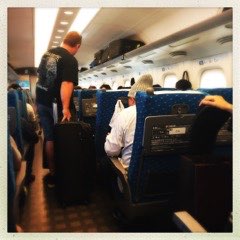
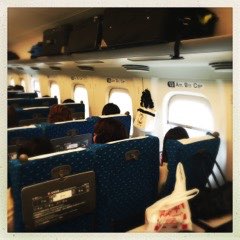
please note that japan is a very densely packed country, and their trains, buses, and even rooms are just not equipped to handle 15-18 tourists toting giant suitcases. be prepared that trains and shuttle buses simply do not have storage space for anything larger than a carry-on size suitcase––and you must be able to lift it into overhead bin/shelf space or be prepared to sit with it on your lap. NOTE: beginning in march of 2020, large suitcases (anything that can NOT fit in the overhead rack) will NOT be allowed on japanese trains. you will not be able to leave your suitcase at the end of the car behind the last seats as in the past. if you bring a suitcase larger than a carry-on, you will be forced to send your luggage via courier service instead (which comes with a two day delay until you are reunited with your bag, at a charge of $50 per bag). because of this new rule, if you bring a suitcase larger than fifty pounds or 24 inches you WILL be required to ship your luggage via the local courier service at $50 per suitcase per travel leg, which we will arrange for you at the first hotel. if you try to take a large suitcase along, you will be fined at each leg of the train travel, and hold up the group in doing so. trust us: you do not want the wrath of the group turned on for being “that person” who tries to schlep three bags, always holding everyone up, losing things, getting in everyone’s way.
we have tried to be reasonable about this in the past, but still some travelers insist on showing up with the biggest suitcase they could find. one note: you can leave a large bags/items behind in the narita “home base” hotel while we are out in the country, and then be reacquainted with it each time we return to narita. i use this free and safe service for my carry-on needs that i don’t need in country but rather only on the plane. i also ship souvenirs from each town back to the narita hotel for my departure, to fill that large suitcase.
Q: what is “luggage service”?
A: in japan there is a great fast and safe network of UPS-type courier companies that exist simply to transport people’s luggage. you will rarely see anyone on a japanese train with large luggage---as i mentioned above there simply isn’t the room in the overhead bins. you can use this service if you find a treasure too big for your suitcase while we are traveling the countryside or if you insist on bringing a giant piece of luggage. the service costs approx. $50 per bag and takes one or two days depending on distance. this is also a great service to use if any of you buy too many souvenirs or something too large to carry----it can be sent back to the tokyo/narita hotel for you so you are not weighed down while traveling. each hotel can help you arrange this shipping service along our route.
Q: is airfare included?
A: no. we have found that over half the people will use their airline miles to purchase their tickets. flights from the US leave the west coast at approximately the same time, and arrive at narita within the same 2 hour window. aside from delays, everyone on our last tour arrived on 5 different flights within 1.5 hours of each other. we recommend you check with www.kayak.com to compare fares. the best and lowest fares are always to be found from LAX, and it might be good for your wallet to get to the west coast and fly from there.
Q: what meals are included in the cost?
A: all of the breakfasts and many of the dinners, but no lunches. breakfasts on our tours are quite substantial kaiseki (multi-course) feasts in the small inns or lavish buffets in tokyo. most have said that they are big enough to not need a full lunch, but more of a tea time snack. included dinners range from gourmet kaiseki dinners in the small country inns, to some of our favorite small spots that specialize in locally grown vegetables and meats. experiencing japan through its food is one of the highlights of the trip, and we have chosen our dinner places very carefully (we love to eat!). beverages are not included in the tour cost, as some drink, some do not, and others drink enough for two! at the check-out time from each inn we will collect the cost of the items you charged to your room (massage, room service, etc...), as well as the cost of any beverages you may have consumed at the dinners. in those instances, for example, we divide the number of folk drinking sake by the cost and average it out for everyone. if you do not want to be included in the sharing of sake, please just inform us ahead of time and we can separate it out.
Q: what do things cost in japan?
A: unlike what you may have heard about japan being prohibitively expensive, i find the costs to be similar to those in the states---in fact, sometimes much cheaper than our beloved santa fe! massage is roughly one dollar per minute, much like here. budget approx. $10 for lunch, $20 for dinner, although you could do either for more or less depending on your tastes. in the example of sharing the cost of sake at a banquet dinner, mentioned above, we averaged $20 per person most nights (and the last group was a big drinking crowd!). when going out as a group, small or large, it is customary to receive just one bill and have to divide it amongst yourselves. we found that dividing it equally works out just fine in most instances. keep in mind that there is no tipping in japan---anywhere---so this will help you to budget accordingly.
Q: why is the cost quoted in japanese yen?
A: we are a small company leading small tours, and although we wish we could control the world economy, we haven’t quite figured how to do this yet! we pay all of our costs in yen, dealing with very small inns whose owners only deal in yen. due to the current fluctuations of the yen to dollar, we have decided this is the most fair way to calculate the costs. when you pay your final cost, you will be locked in as to the final price and we will pay the inns at that time and thus lock in that rate. the earlier you pay, the earlier you know the exact cost.
Q: how can we pay for the tour?
A: along with a signed copy of your application, a copy of your passport, and proof of travel insurance, we can accept personal checks or credit cards. checks can be made payable to “ten thousand waves” and mailed to 320 tesuque drive, santa fe, new mexico, 87505, attn: tours!
Q: do you recommend trip insurance?
A: in the past we strongly recommended buying trip insurance, to protect your investment as well as for the peace of mind. however, please note that starting in 2020 we now REQUIRE proof of travel insurance. unfortunately, 2019 was a year packed full of travel emergencies, from typhoons and their delays to medical emergencies that required hospitalization and evacuation. japan does have its share of natural disasters which in 2019 caused a few people to extend their stay in japan or choose to move hotels----all things that are at your own cost, which travel insurance can help to cover the costs. medical emergencies can be quite costly, as well, and for this reason we have changed our policy. you can fax or email us a copy of your insurance after you have signed up for the tour.
many companies offer a la carte plans, allowing you to pick and choose what areas you wish to cover: baggage loss, emergency health evacuation, trip cancellation, etc... you should know that most insurance needs you to purchase a policy within 14 days of signing up for the tour, and the earlier you purchase your policy the more affordable they become. please keep in mind that deposits for ten thousand waves tours are non-refundable and final payments are within the period of no cancellation refunds.
some credit card companies also offer automatic insurance, so you should check with your card companies. we have had pleasant experiences dealing with travelguard both as traveling customers and helping our customers get claims met: www.travelguard.com. www.insuremytrip.com compares all the major companies for you, which can be helpful to see what is on offer and the costs involved.
Q: what about money in japan/getting yen?
A: even in this global economy, cash is still king in Japan. people think nothing of walking around with many thousands of yen in their pocket (a testament to how safe the country is in general, so don't hesitate to withdraw one lump sum and only get hit with one international withdrawal fee---check with your bank on this). the best exchange rate comes from withdrawing yen from your bank account via an ATM machine. the lowest rate is when you exchange straight american cash (which is difficult and time consuming, very tedious as the inspect each bill for counterfeit potential). travelers checks are considered insured against fakes, so those go over well but it is difficult to find people willing to exchange them anymore.
most japanese banks even with recognizable international ATM/credit card company symbols will not accept ATM cards from american banks. in tokyo you may see a rare Citibank and have a Citibank card, but they will only work at their branches. even if you see the “visa” or "sirus" symbol on a bank’s ATM it will not work. we do not recommend you try these ATMs, since they have been known to “keep” poeple’s cards.
however, there are three ATM options that work very well for us: machines within post offices and 7-11 and lawson’s convenience stores! the Japanese government owns the postal system, and most of the offices have international ATMs. we have found that the exchange rate is the best when using these post office ATM machines to get cash. note that there will be these postal ATMs in even the smallest villages we will be visiting, except for nyuto onsen and kurokawa onsen.
newer to the japanese banking scene is the convenience store 7-11. a japanese-owned corporation with stores that can be found all over Japan, it has ATM machines that accept our foreign debit cards. new this year they will also have free wi-fi in their stores, too!
the stores in most villages and towns outside the big cities do not take credit cards (at all, not just american ones, but not Japanese ones either!) of course in the bigger cities, you can pay for purchases with credit cards in large department stores and higher end places. however, i should point out that our cards do not always work with the japanese banking system, so take multiple cards from multiple banks. also be aware that most US credit cards charge "foreign transaction fees" for each purchase you make in Japan, which can be quite substantial.
we recommend taking a mix of ATM cards and some cash just in case, and primarily use the ATM. don’t bother trying to exchange dollars for yen at your home bank before you go---it will take a long time and you will get hit with a bigger fee than using your ATM card. when you arrive at narita airport, after you clear customs and gather your bags, you will enter into the arrivals lobby. In this lobby are many ATM machines that do actually work for our cards, and there will be time to withdraw cash before we take the limousine bus into tokyo city and our hotel. in the city block surrounding our tokyo hotel are also a post office and a 7-11 store, so you will be able to get money if time does not allow it at the airport.
Q: what about internet connectivity? will my phone work in japan?
A: check with your local phone carrier regarding international calling/data plans. we recommend turning off your “roaming” setting and relying on wi-fi instead of those data plans. a few of our travelers used up a $100 data plan in just 3 days last year, while renting a wi-fi router cost me $150 for 45 days of unlimited, wicked fast usage that enabled me to use the wifi (and thus text/email/maps) even in the smallest villages or the fastest bullet trains. you can rent these wi-fi routers at the airport, or even have delivered to our narita hotel upon your arrival. i can highly recommend www.wifi-hire.com for its rates, ease of use, and quality routers. my suggestion would be to use the “deliver to your hotel” service and have it waiting for you in narita richmond hotel. at the end of your trip you can return to the airport, or simply ask the hotel front desk to mail back to them (they will provide an envelope if you choose this service).
Q: what about tipping?
A: there is no tipping in japan---neither in restaurants, hotels, cabs, massages, etc.. it may take some getting used to, but the japanese can consider it an insult to be offered additional money. they take immense pride in offering the best customer service without expecting anything extra. i recommend that you bring souvenirs from your hometown to give as “gifts” to those you come in contact with who have done something extraordinary for you. for example, four people last year joined us from the denver area and brought along colorado rockies baseball caps. the charter bus driver who drove us around for 2 days in the mountains is probably wearing it at this very moment---he was so touched by this gift it was a joy to watch the exchange. i often bring small things like beef jerky, local green chile chocolates, waves t-shirts...and people are always touched by the gesture. it is up to you! as for tipping of the guides: also up to you (unexpected and delightful, always).
Q: how many people will be on our trip?
A: we are committed to remaining a small tour company leading small group tours. we aim for 16-20 people per tour. this size enables us to take over entire inns and restaurants, as that is the maximum capacity in many of the villages we visit.
Q: who are our guides?
A: organizer and director of ten thousand waves tours, as well as writer of this site (and therefore the first person in the text): deborah fleig. international liaison and on the ground go-to-guide: kaz tani. kaz is from japan and therefore supremely fluent in japanese, deborah gets by just fine (especially when talking about food or sake!) kaz is a morning person, deborah a night owl---so the combination makes for a good team!
short bios:
deborah is the official photographer and designer for the waves with a huge wanderlust. thinks developing these tours “fun” and the organization brings out her german heritage. she has a built-in GPS, so she is always the one to follow (especially with the neon green tour guide outfit!) she passed the level three sake sommelier exam and also received her federal sake importing license, and so is the person you want to sit next to at dinners if you want to learn more about sake. not being a morning person, you will never see her at breakfast--- but she is always willing to stay up late for another toast! big slow-food gourmet interests, too. as she has been known to say: “girls gotta eat, and it might as well be good!” she was the dreamer and muse for the new restaurant at the waves.
kaz has been the international liaison for the waves for over 19 years. originally from kamakura, japan, he considers himself an honorary texan, having graduated from texas a&m. and, after so many years working with us at the Waves, he is now splitting his citizenship into 3rds, adding new mexico to his home list. he is an enthusiastic athlete, always hiking or doing yoga. not-so-secret official nude model for all waves advertising. he is the morning person of the tour, ever ready to rise at dawn for a bath and some sushi. we refer to him as the “sweetest man alive” but also very strict: do not be late on his watch!
Q: recommended reading?
Fiction:
1. The Tale of Genji by Shikibu Murasaki
Genji is the son of a Japanese emperor. Although beautiful and extraordinarily gifted, he is destined to be kept from the throne by virtue of his birth to a low-ranking woman. The Tale of Genji is the story of his life and loves (of which there are plenty). There are at least two reasons why this book deserves to be number one on this list. It is thought to be the first novel ever written - it was produced just after 1000 AD. And the author was a woman - an aristocrat who, unusually for the time, was raised and educated by her father.
2. I am a Cat by Natsume Soseki
"I am a cat but as yet I have no name." So opens one of the most unusual works in Japanese literature. The narrator is a cat who finds a home in the house of Mr Sneeze - a schoolteacher. In between bouts of sleep, the narrator observes his master and his friends as they struggle with daily life in the middle class society of 1920s Japan. Soseki originally submitted the first chapter to the literary journal Hototogisu as a short story but was persuaded to write further instalments. There are 11 in total. Each one stands alone, although the characters and themes carry throughout.
3. Some Prefer Nettles by Junichiro Tanizaki
In the early 1900s, many Japanese authors wrote about the tension between western ideas and Japanese traditions. This followed the re-opening of Japan to the west in the 1850s and a period of rapid industrialisation. In Some Prefer Nettles, Tanizaki addressed this theme through the main character, Kaname. Kaname is a thoroughly westernised man - he visits prostitutes and encourages his wife to have an affair. Yet despite being trapped in a loveless marriage, he is unable to ask for a divorce. Then, under the influence of his father-in-law, Kaname finds himself increasingly drawn to the older traditions of Japan threatened by progress. Even though it is set in the 1920s, this novel is likely to resonate with contemporary Japanese society.
4. Nip the Buds, Shoot the Kids by Kenzaburo Oe
Japanese literature 1945 was heavily influenced by the country's defeat in the second world war, with many authors addressing social and political issues in their work. Oe grew up in wartime Japan. For his first novel, produced when he was just 23, he wrote about a group of boys evacuated to a remote village in the closing days of the war. This novel - frequently compared with William Golding's Lord of the Flies - began a literary career that earned Oe the Nobel prize in 1994.
5. Kitchen by Banana Yoshimoto
Contemporary Japanese novelists have sparked fierce debate in Japan over whether they constitute true literature or are merely pop fiction. Irrespective, authors such as Banana Yoshimoto and Haruki Murakami have enjoyed considerable success, both in their own country and abroad. Kitchen tells the story of Sakurai Mikage, a young woman whose grandmother has passed away. Consumed by grief, Sakurai spends her nights sleeping on the kitchen floor of her apartment until Yuichi Tanabe knocks on her door. Yuichi - a fellow student - invites her to live with him and his transsexual mother. She agrees and although adrift in every other sense, Sakurai finds herself anchored to the Tanabes' couch and their kitchen where she cooks for the family to reciprocate their kindness.
6. The Wind-Up Bird Chronicle by Haruki Murakami
Murakami is one of my favourite authors and I could have filled this list with his entire back catalogue, but restricting myself to just one of his fictional works I chose The Wind-Up Bird Chronicle. This novel established Murakami as a leading figure in world literature. It also won the Yomiuri Prize, which was awarded to him by Kenzaburo Oe, formerly his harshest critic. Toru Okada, the book's narrator, is a dreamy introvert luxuriating in unemployment, supported by his wife Kumiko. When the couple's cat goes missing, Kumiko suggests that her husband's time would be best spent looking for it. Then she herself disappears. As Toru searches for her, he meets a succession of strange characters - two psychic sisters, a disaffected teenage girl, a soldier who fought in the second world war. Like many of his previous novels, The Wind-Up Bird Chronicle mixes American pop culture with a healthy dash of science fiction, philosophy, social commentary and detective fiction. Murakami also deals with some heavyweight subjects too, particularly the atrocities committed by the Japanese army in China during the second world war.
7. Dreaming Pachinko by Isaac Adamson
As an example of foreign fiction set in Japan I've chosen Dreaming Pachinko by Isaac Adamson. It's a fun book that by the author's own admission shouldn't be taken too seriously. It's also the third novel to feature Youth In Asia (a magazine based in Cleveland) journalist and amateur detective Billy Chaka. When Chaka gets sent to Tokyo to interview a former rock star turned pachinko addict he thinks it's going to be an easy assignment. That's until he witnesses a woman suffer a violent seizure and finds himself embroiled in a blackmail plot. Fans of Raymond Chandler will find much to enjoy in this book. If you have time, read the whole series. Great fun!
Non-Fiction:
1. Old Kyoto by Diane Durston
A guide to traditional shops, restaurants and inns. Gives a nice explanation and feel for all the crafts of Kyoto. I don't recommend trying to find any one particular place, but finding a neighborhood that might interest you (pickle making, fabric dyeing and designing, etc...) and go wander around.
2. What's What in Japanese Restaurants
Best guide I have found about what is served, what it is called, etc... Of course, you will have us to help most of the time, but if you are curious this is the food guide to get.
And, movies!!
I really recommend everyone watch "Spirited Away," "Tampopo", and "Lost In Translation". If you can find it, there was a German movie about Japan in 1999 by Doris Dorrie, called "Enlightenment Guaranteed" that I absolutely love. For a great look at izakaya culture, check out “Midnight Diner” on netflix. If you really love sushi and want a look into the mind of an 85-years-old-but-still-going-strong sushi master, "Jiro Dreams of Sushi". While we used to take people to his restaurant, we didn’t like the severe customer service and have found other delicious places to recommend for anyone spending time before of after the tour in Tokyo.